Strategic Location & Manufacturing Scale
Founded in 2002, Weifang Taize Chemical Co., Ltd. is located in the National Binhai Economic and Technological Development Zone in Weifang, Shandong Province—one of China's premier chemical industrial clusters. Benefiting from rich local brine resources and advanced production technology, our annual manufacturing capacity reaches 46,000+ metric tons, encompassing anhydrous powder, anhydrous pellets/prills, dihydrate flakes, and food-grade E509 spheres.
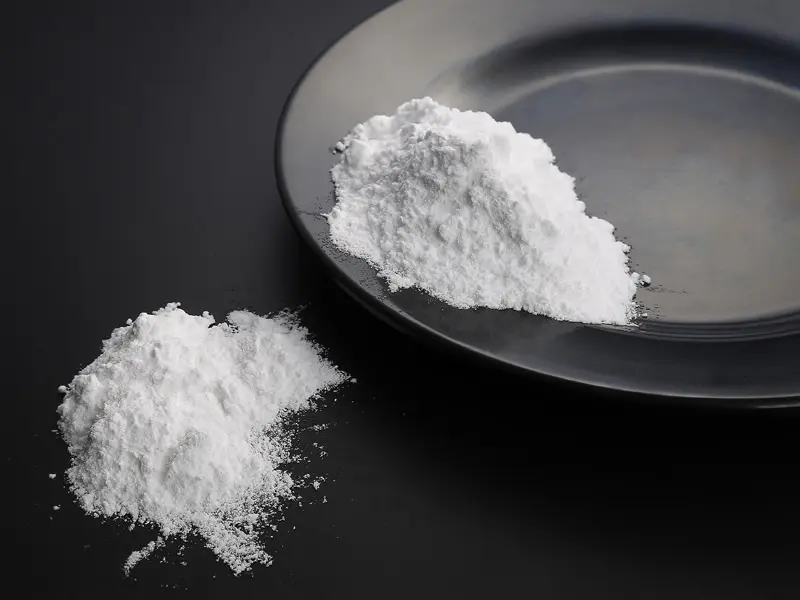
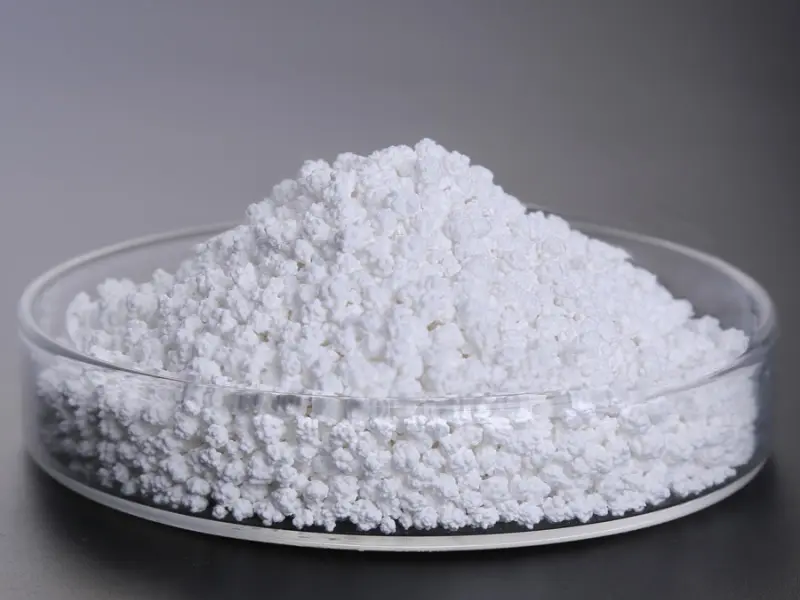
What is Calcium Chloride?
Calcium Chloride produced by Weifang Taize Chemical Co., Ltd. has the chemical formula CaCl₂, with a molecular weight of 110.98 g/mol. It is an inorganic chloride with stable chemical properties. The product appears as white crystals, powders or spherical shapes, and has extremely strong deliquescence and water solubility. It can quickly absorb moisture from the air and has a melting point of 782℃ and a boiling point of 1935℃, effectively meeting the usage requirements of various scenarios.
We supply a full range of calcium chloride in two water forms and anhydrous form, with purity covering 74% to over 94%. We strictly control the content of impurities such as magnesium chloride and iron chloride, and the pH value is stable between 5.5 and 7.5. This ensures the prevention of equipment corrosion from the source and meets the core specification requirements of raw materials for different scenarios.
Our Production Advantages
We adopt the green ammonia-soda process for production, combined with advanced production equipment, strictly following standards such as GB/T26520-2021 and HG/T 2327-2004, balancing production capacity and environmental protection.
Selecting high-quality raw materials, each batch undergoes multiple tests with complete test reports, ensuring standard-compliant purity and impurity levels, long shelf life, and stable performance.
We support customization of packaging, purity, and particle size, leveraging Shandong Port advantages for efficient export, providing technical consultation and full-process after-sales support.
Production Process Steps
The preparation of calcium chloride mainly involves two methods: the limestone method and the Solvay method. Taking the Solvay method as an example:
Hydrochloric acid and limestone are added in precise proportions for a neutralization reaction.
The solution is heated and evaporated to remove excess water, forming a high-concentration solution.
The solution is cooled to cause calcium chloride to crystallize into solid product.
Stored in sealed containers to prevent moisture absorption from the air and quality degradation.
Frequently Asked Technical Questions
Is calcium chloride a type of salt?
The answer is yes. Calcium chloride falls under the category of inorganic salts. Its chemical formula is CaCl₂ and it appears as a white crystalline solid at room temperature. It can be achieved through the neutralization reaction between calcium hydroxide and hydrochloric acid, possessing typical characteristics of salt substances and high water solubility.
Should calcium chloride be classified as an acid or a salt?
Calcium chloride is clearly classified as a salt, not an acid. It is an ionic compound formed by the combination of the metal calcium ion and the non-metal chlorine ion. It exhibits typical characteristics of ionic halides with strong hygroscopicity, making it suitable for use across diverse industrial fields.
Is calcium chloride safer than table salt for de-icing?
Compared to traditional rock salt, calcium chloride is considered a safer alternative:
- It causes less harm to surrounding grass and vegetation, offering superior environmental protection.
- It exhibits strong adaptability to low temperatures, maintaining good performance even in extreme cold environments as low as -9℃.
- It has less corrosiveness to roads and infrastructure, effectively reducing wear and tear to extend their service life.